Need help?:


Not every truth needs an audience, and not every wound needs a microphone
The internet can hear your accusation, but it cannot always hear the silence, history and context behind it.
Never burn a private bridge publicly when tomorrow may require you to cross it privately
Social media can amplify your voice, but it cannot replace wisdom, reconciliation, justice or peace
Some battles genuinely require public intervention.Some require legal intervention.
Some require professional help
But many private wars require something increasingly rare:
private conversation, honest reflection, wise counsel, accountability, forgiveness, boundaries and sometimes the courage to walk away quietly
Let social media connect humanity, not become the battlefield where we publicly destroy the people we once privately loved
Something troubling is happening to us.
We are gradually losing the sacred boundary between what should be shared and what should be settled.
A disagreement between husband and wife becomes a Facebook post. A family misunderstanding becomes a WhatsApp status. A broken friendship becomes an Instagram story. A relationship ends, and suddenly screenshots, private conversations, voice notes, photographs and secrets gathered during years of trust are released to strangers.
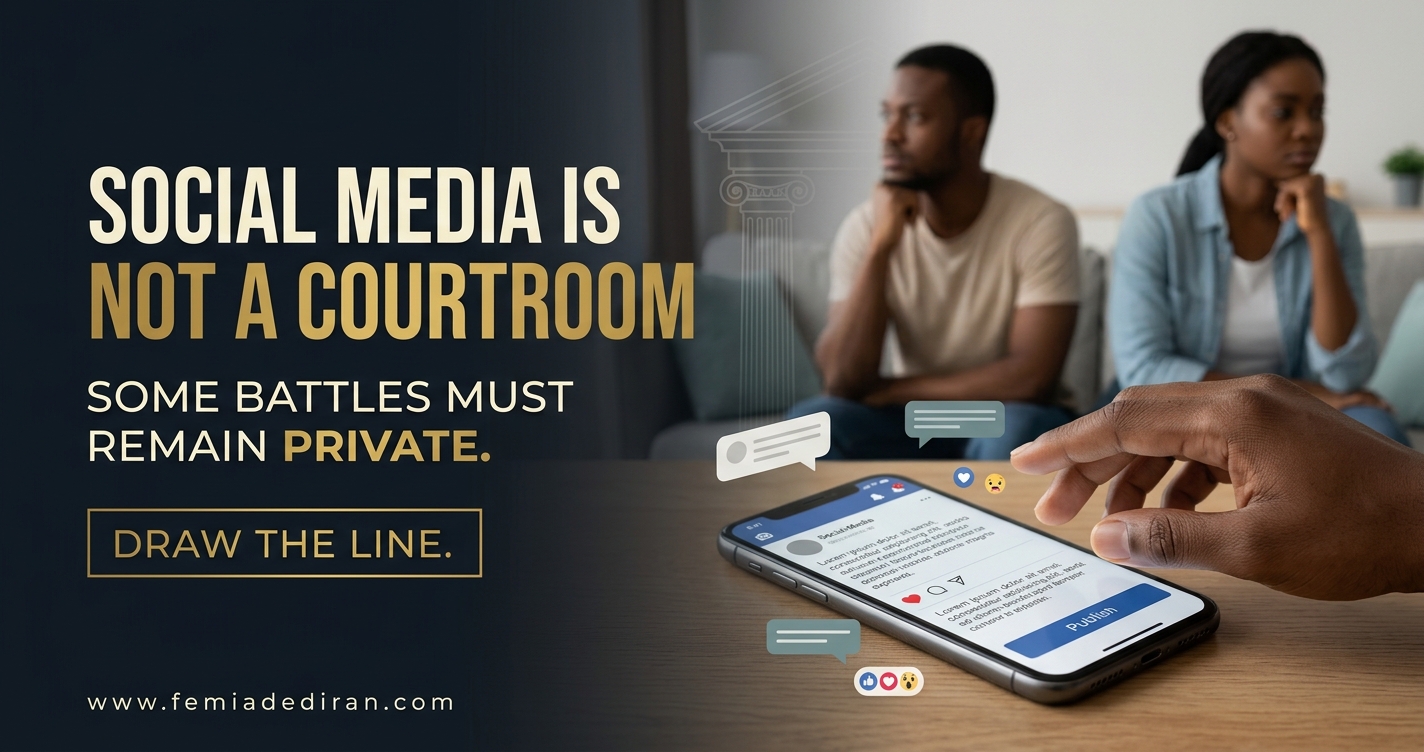
Social media has become the courtroom where everybody arrives with evidence, but almost nobody has the complete story.
And perhaps this is the first truth we must recover:
“Not every truth needs an audience, and not every wound needs a microphone.”
There are moments when speaking publicly is necessary, especially where there is abuse, exploitation, danger, criminal conduct or a legitimate need for protection and accountability.
Silence must never become a shelter for wrongdoing.
But there is an enormous difference between seeking help and seeking humiliation; between exposing danger and exposing someone because we are angry; between accountability and revenge.
That distinction is disappearing.
We now live in a culture where people sometimes reach for their phones before reaching for understanding.
But anger is a terrible editor.
It publishes what wisdom would have deleted.
It reveals what reconciliation may later desperately wish had remained private.
And it invites thousands of people into a conflict they neither understand nor have the responsibility to resolve.
When you invite the world into a private battle, you may win the argument and still lose the relationship.
The crowd usually receives only fragments.
A screenshot does not contain ten years of marriage.
A sixty-second video cannot explain twenty years of friendship.
One angry voice note cannot tell the complete story of a family.
Yet strangers choose sides, insult people they have never met, diagnose motives they cannot know and sometimes encourage decisions whose consequences they will never have to live with.
That is one of the great dangers of social-media justice:
The audience participates in the drama, but the people involved inherit the consequences.
The internet can hear your accusation, but it cannot always hear the silence, history and context behind it.
And there is something even more dangerous.
The internet remembers what emotions forget.
Today you may be furious with your spouse. Tomorrow you may reconcile.
Today you may hate your sibling. Five years from now, that same sibling may be standing beside you during the darkest moment of your life.
Today a friendship may collapse. Tomorrow maturity may reveal that both of you misunderstood each other.
But what happens to the screenshots?
What happens to the humiliating videos?
What happens to the accusations already copied, downloaded, forwarded and archived?
What happens when your children eventually discover the digital war their parents fought before millions of strangers?
A post written in five minutes of anger can leave a footprint that survives five years of regret
This is why privacy is not always secrecy.
Sometimes privacy is wisdom.
Sometimes refusing to publish somebody’s weakness is not cowardice; it is character.
Sometimes having evidence and choosing not to humiliate someone with it is strength.
Sometimes the most powerful response is not another post, another screenshot or another revelation.
Sometimes it is simply knowing when to stop.
Because relationships can survive disagreements.
Families can survive misunderstandings.
Friendships can survive painful conversations.
Marriages can sometimes survive enormous crises.
But public humiliation introduces another wound: the wound of an audience.
Once thousands of people have applauded your anger, reconciliation can begin to feel like defeat. Pride enters the room.
People begin defending what they posted rather than repairing what was broken.
Never burn a private bridge publicly when tomorrow may require you to cross it privately.
This does not mean hiding abuse.
It does not mean protecting violence.
It does not mean remaining silent when someone is in danger.
Police, courts, counselors, safeguarding professionals, religious leaders, trusted family members and appropriate authorities exist precisely because some situations require intervention beyond the people directly involved.
The wisdom is knowing the difference.
Maturity is knowing the difference between a secret that protects wrongdoing and privacy that protects dignity.
Before you expose your spouse, your ex, your sibling, your parent, your child, your friend or someone who once trusted you, stop for one minute.
Ask yourself:
What exactly am I trying to accomplish?
Do I want resolution, or retaliation?
Do I need protection, or applause?
Am I seeking justice, or trying to make another human being feel the pain I am feeling?
Will publishing this solve the problem, or simply recruit spectators into it?
Will I still want these words online when my anger disappears?
And perhaps the hardest question:
If reconciliation became possible tomorrow, would today’s post make it impossible?
Because social media is an extraordinary communication tool, but it is a poor therapist, an impatient mediator and a dangerous courtroom.
Followers cannot repair your marriage.
Likes cannot restore trust.
Comments cannot raise your children.
Shares cannot rebuild a family.
Virality cannot heal a wounded heart.
And strangers who shout “leave them!”, “expose them!” or “destroy them!” tonight will probably be scrolling through something completely different tomorrow, while you remain behind to live with the consequences.
Social media can amplify your voice, but it cannot replace wisdom, reconciliation, justice or peace.
So perhaps our generation needs to recover an old virtue:
DISCRETION.
Not everything must become content.
Not every disagreement requires witnesses.
Not every betrayal requires a broadcast.
Not every disappointment deserves a public trial.
And not everybody following you deserves access to the most intimate rooms of your life.
Some battles genuinely require public intervention.
Some require legal intervention.
Some require professional help
But many private wars require something increasingly rare:
private conversation, honest reflection, wise counsel, accountability, forgiveness, boundaries and sometimes the courage to walk away quietly
The world does not need to know everything that happened between you and another human being.
Protect your dignity.
Protect other people’s humanity.
Protect children who may someday read what adults posted in anger.
Protect tomorrow from emotions that belong only to today.
And before pressing POST, remember:
You can delete a post.
You cannot always delete its consequences.
DRAW THE LINE.
Private disagreement does not automatically deserve public warfare.
Let social media connect humanity, not become the battlefield where we publicly destroy the people we once privately loved