Need help?:


Not all riches enrich; some simply make you too expensive to save
Success is not the reward; it is the examination, revealing that abundance tests discipline more brutally than scarcity
Wealth, then, is not treasure first; it is trial before comfort.
Money does not change who you are; it introduces you to who you never knew you could be,” and suddenly wealth becomes not an arrival but an interrogation
What you call abundance often arrives disguised as accountability
Wealth never travels alone, it brings shadows, expectations, and enemies with it,
Wealth bends timelines, rearranges loyalties, and rewrites self-perception. It does not rest on a person; it presses into the soul with quiet authority
For the young dreamer, money is paradise; for the wise, it is responsibility in expensive robes.
If your soul is smaller than your salary, your life will eventually revolt,” because money does not rescue smallness , it amplifies it
Ọláwúwo is not the weight of gold, but the gravity of status; not the shine of coins, but the darkness they cast. Wealth does not break men, it unmasks them.
Ọláníyọnu returns to complete the circle, wealth is full of riddles, and not all gifts are blessings without wisdom. Many celebrate income, but few ask whether their souls can survive promotion
When money becomes lighter than your character, your fall becomes inevitable,for wealth respects only those heavier than it. Another echoes, Fortune is not dangerous, unprepared minds are,
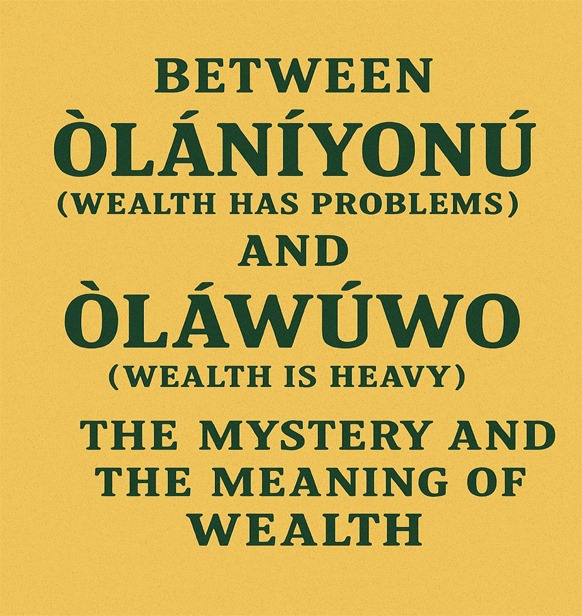
Between Ọláníyọnu and Ọláwúwo stands a message carved in spiritual stone: wealth is not a destination, it is a burdened journey measured by how well you carry yourself, not what you carry home. Money can fill hands, but only wisdom fills destiny.
Between Ọláníyọnu and Ọláwúwo, a civilization whispers a truth many fear to admit: wealth is never just possession, it is weight and trouble wearing different names.
Ọláníyọnu says wealth has problems; Ọláwúwo answers that wealth is heavy. And in their quiet agreement, they expose the illusion of financial dreaming without emotional stamina.
As one reflection unfolds, Money does not change who you are; it introduces you to who you never knew you could be, and suddenly wealth becomes not an arrival but an interrogation.
Another whispers, What you call abundance often arrives disguised as accountability, reminding us that nothing increases your visibility without increasing your vulnerability.
For the young dreamer, money is paradise; for the wise, it is responsibility in expensive robes.
And so the ancient voice continues, Wealth never travels alone, it brings shadows, expectations, and enemies with it, declaring that every vault invites a thousand eyes and every success plants target marks.
Wealth, then, is not treasure first; it is trial before comfort.
Ọláwúwo deepens the narrative not about what wealth gives, but what it demands.
Wealth bends timelines, rearranges loyalties, and rewrites self-perception. It does not rest on a person; it presses into the soul with quiet authority.
As one truth insists, When money becomes lighter than your character, your fall becomes inevitable for wealth respects only those heavier than it.
Another echoes, Fortune is not dangerous unprepared minds are, insisting that what destroys people is not money but fragility under privilege.
And somewhere in the burden of success, a further warning rings: Not all riches enrich; some simply make you too expensive to save, preying on those who trade identity for image and peace for prestige.
Ọláwúwo is not the weight of gold, but the gravity of status; not the shine of coins, but the darkness they cast. Wealth does not break men, it unmasks them.
And finally, Ọláníyọnu returns to complete the circle, wealth is full of riddles, and not all gifts are blessings without wisdom.
Many celebrate income, but few ask whether their souls can survive promotion.
One final voice cautions, Success is not the reward; it is the examination, revealing that abundance tests discipline more brutally than scarcity.
Another settles the matter with haunting certainty: If your soul is smaller than your salary, your life will eventually revolt, because money does not rescue smallness , it amplifies it.
So between Ọláníyọnu and Ọláwúwo stands a message carved in spiritual stone: wealth is not a destination , it is a burdened journey measured by how well you carry yourself, not what you carry home. Money can fill hands, but only wisdom fills destiny.