Need help?:


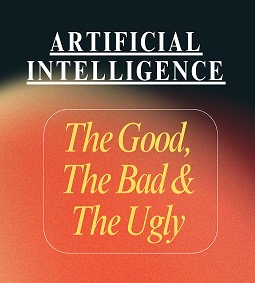
When we outsource our thinking, we also outsource our becoming.
Yet the ugliest part of AI is not its power, it is our unawareness of what we are losing. The tragedy is not that AI is growing too fast; it is that humans are growing too passive
We have gradually traded contemplation for convenience, reflection for automation, intuition for algorithms. Our minds now scroll instead of soar; we consume information we no longer question; we accept answers we no longer analyze. Worst of all, we have started believing that intelligence is something downloaded, not developed
The truth is that the bad side of AI is not the machine itself, but what the machine slowly steals: our creativity, our originality, our mental stamina, our capacity for solitude, and our inner voice.
We have jeopardized imagination on the altar of automation, surrendered craftsmanship for shortcuts, replaced wisdom with data, substituted depth with speed, and allowed machines to mimic emotions we no longer nurture within ourselves
Artificial Intelligence has become the brightest torch of our age, illuminating paths we never dared to explore, amplifying human capacity, and accelerating innovation at a pace that mocks the limitations of time.
Yet, in this brilliance lies a quiet warning: Every tool that multiplies our strength also magnifies our surrender.
The good of AI is clear: efficiency, precision, unimaginable scale. AI diagnoses cancer, predicts hurricanes, powers global communication, and helps us overcome intellectual barriers. But for all its goodness, AI also invites us into a subtle dependency that blinds us to the deeper cost, our natural intelligence, our curiosity, our ability to wrestle with ideas without external help.
When machines think for us, we forget the joy, and the discipline, of thinking.
We have jeopardized imagination on the altar of automation, surrendered craftsmanship for shortcuts, replaced wisdom with data, substituted depth with speed, and allowed machines to mimic emotions we no longer nurture within ourselves.
A mind that becomes too comfortable with artificial brilliance soon forgets how to shine naturally.
The call, therefore, is not to destroy AI but to discipline our relationship with it.
We must return to the natural so that we can rise into the supernatural, where imagination, intuition, and human spirit still reign above algorithms.
Let AI assist, but let our minds lead. Let machines calculate, but let humans create. Let technology support, but let humanity soar. Because the future belongs not to those who depend on machines, but to those who know when to unplug in order to truly think, truly imagine, and truly become.
-Femi Adediran, December 2025
Artificial Intelligence has become the brightest torch of our age, illuminating paths we never dared to explore, amplifying human capacity, and accelerating innovation at a pace that mocks the limitations of time.
Yet, in this brilliance lies a quiet warning: Every tool that multiplies our strength also magnifies our surrender.
The good of AI is clear: efficiency, precision, unimaginable scale. AI diagnoses cancer, predicts hurricanes, powers global communication, and helps us overcome intellectual barriers. But for all its goodness, AI also invites us into a subtle dependency that blinds us to the deeper cost, our natural intelligence, our curiosity, our ability to wrestle with ideas without external help.
When machines think for us, we forget the joy, and the discipline, of thinking.
The truth is that the bad side of AI is not the machine itself, but what the machine slowly steals: our creativity, our originality, our mental stamina, our capacity for solitude, and our inner voice.
When we outsource our thinking, we also outsource our becoming.
We have gradually traded contemplation for convenience, reflection for automation, intuition for algorithms. Our minds now scroll instead of soar; we consume information we no longer question; we accept answers we no longer analyze. Worst of all, we have started believing that intelligence is something downloaded, not developed.
We have jeopardized imagination on the altar of automation, surrendered craftsmanship for shortcuts, replaced wisdom with data, substituted depth with speed, and allowed machines to mimic emotions we no longer nurture within ourselves.
Yet the ugliest part of AI is not its power, it is our unawareness of what we are losing. The tragedy is not that AI is growing too fast; it is that humans are growing too passive.
A mind that becomes too comfortable with artificial brilliance soon forgets how to shine naturally.
The call, therefore, is not to destroy AI but to discipline our relationship with it.
We must return to the natural so that we can rise into the supernatural, where imagination, intuition, and human spirit still reign above algorithms.
Let AI assist, but let our minds lead. Let machines calculate, but let humans create. Let technology support, but let humanity soar. Because the future belongs not to those who depend on machines, but to those who know when to unplug in order to truly think, truly imagine, and truly become.